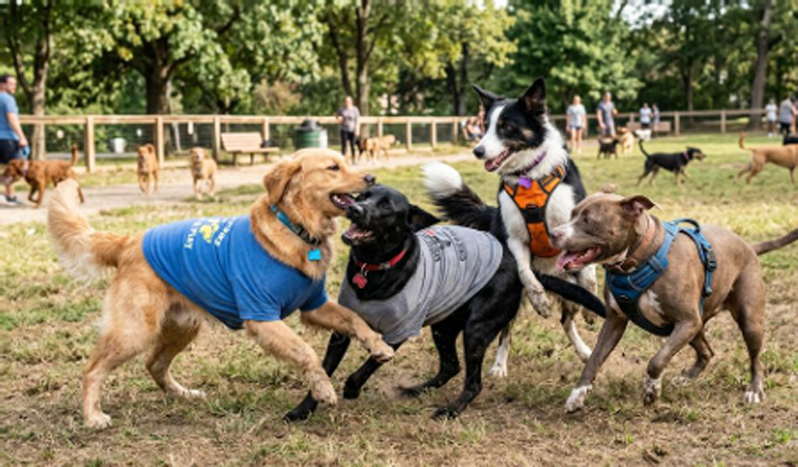
Rough Play or Real Fighting? How to Read the Room During Doggy Playdates
Watching dogs play can sometimes feel like watching a chaotic, no-rules wrestling match. There are open mouths, deep growls, body slams, and flashing teeth. For many owners, a regular playdate can quickly turn into a nerve-wracking game of "Are they having fun, or am I about to break up a fight?"
Because dogs use their mouths and bodies intensely during socialization, it’s easy to misinterpret healthy play as aggression. To keep the peace and protect your pup, you need to look for specific behavioral green lights—and know exactly when to step in.
The Behavioral "Green Lights"
Healthy dog play is all about cooperation and balance. Even the roughest wrestlers will utilize subtle cues to tell each other, "Hey, this is just a game." Look for these signs:
The Play Bow: The ultimate canine contract. When a dog drops their front elbows to the ground while keeping their rear end in the air, they are explicitly stating that any action following this posture is purely for fun.
Role Reversals: In a balanced match, the roles change constantly. The dog who is chasing should eventually become the dog being chased. The dog pinning the other down should eventually take a turn on the bottom. If one dog is constantly dominating or pursuing without a break, the play is becoming one-sided.
Self-Handicapping: Large or strong dogs will consciously tone down their strength when playing with smaller or younger puppies. They might lie on their backs or slow down their movements to match their partner's ability.
The "Sneeze-Laugh": If you hear a dog sneezing rapidly during a wrestling match, don't reach for the tissues. Dogs use a sharp, huffing sneeze during play to signal that they are relaxed and diffusing tension.
The Warning Signs: When to Read the Room
Play can cross the line into overstimulation or conflict in a matter of seconds. You should prepare to intervene if you notice:
The "Stiff" Body: Healthy play looks fluid and bouncy. If a dog's posture suddenly goes rigid, their movements become jagged, or they freeze entirely, tension is peaking.
The Tail Tuck or Hide: If a dog tucks their tail tightly between their legs or repeatedly tries to hide behind your legs or under furniture, they are asking for help. They are overwhelmed and no longer enjoying the interaction.
Vertical Posturing: When two dogs stand completely upright on their hind legs, chestto-chest, with stiff bodies and high tails, this is often a prelude to a confrontation rather than a game.
The "Hard" Aggressive Growl: While play growling is common and often highpitched, a deep, continuous, rumbling growl from the chest paired with a closed, tight muzzle is a clear warning sign.
How to Interrupt Safely
If the play is getting too intense, don't wait for a fight to erupt. Instead of yelling (which can increase the dogs' excitement), use a neutral distraction like a whistle, a clap, or stepping calmly between them to implement a 30-second "cool-down" break. Once both dogs take a deep breath and relax their bodies, they can go right back to the fun.
Final Thoughts
Dog playdates are fantastic for mental enrichment, but they require active supervision. By learning to differentiate between healthy wrestling and actual discomfort, you ensure that socialization remains a safe, positive experience for everyone involved.